Metrology for drug delivery continues!

Peter Lucas 24 December 2015

Recently the project team has won a new grant! With this new grant the knowledge and experience gained on infusion technology will be made available through an e-learning module. We are very proud this course will be offered on the e-learning platform from the European Society of Intensive Care Medice (ESICM). Other close parthers are the European Society of Paediatric and Neonatal Intensive Care (ESPNIC), the Dutch Society for Intensive Care (NVIC), the Dutch Pediatric Association (NVK), the Danish National Society of Anesthesia and Intensive Care Medicine (DASAIM) and World Congress on Vascular Access (WoCoVa).

Special issue Biomedical Engineering

Peter Lucas 24 December 2015

The main results from the MeDD project have been published in a special issue from Biomedical Engineering. This special issue focuses on low liquid flows in medical technology, mainly with regard to drug delivery and infusion systems, click here to get access to the articles (subscription may be required).

1-day symposium on infusion technology

Peter Lucas 10 March 2015

On behalf of the MeDD project team we are happy to cordially invite you to a 1-day symposium on infusion technology on May 22 at UMC Utrecht. This 1-day symposium is organized by MeDD and aims at bringing together researchers, doctors, nurses and clinical physicist in the field of drug delivery.

The program is divided into 4 sessions; 2 sessions are devoted to present the results achieved with the MeDD project, whereas the other two sessions are devoted to ‘Clinical applications and policy’ and ‘Multi-infusion and new technologies’, click here for the registration form and the full program. The fee for this 1-day conference is € 50 and will be used to cover for the expenses for lunch and drinks. Click here for the directions at UMC Utrecht.

Third progress meeting

Peter Lucas 11 November 2014

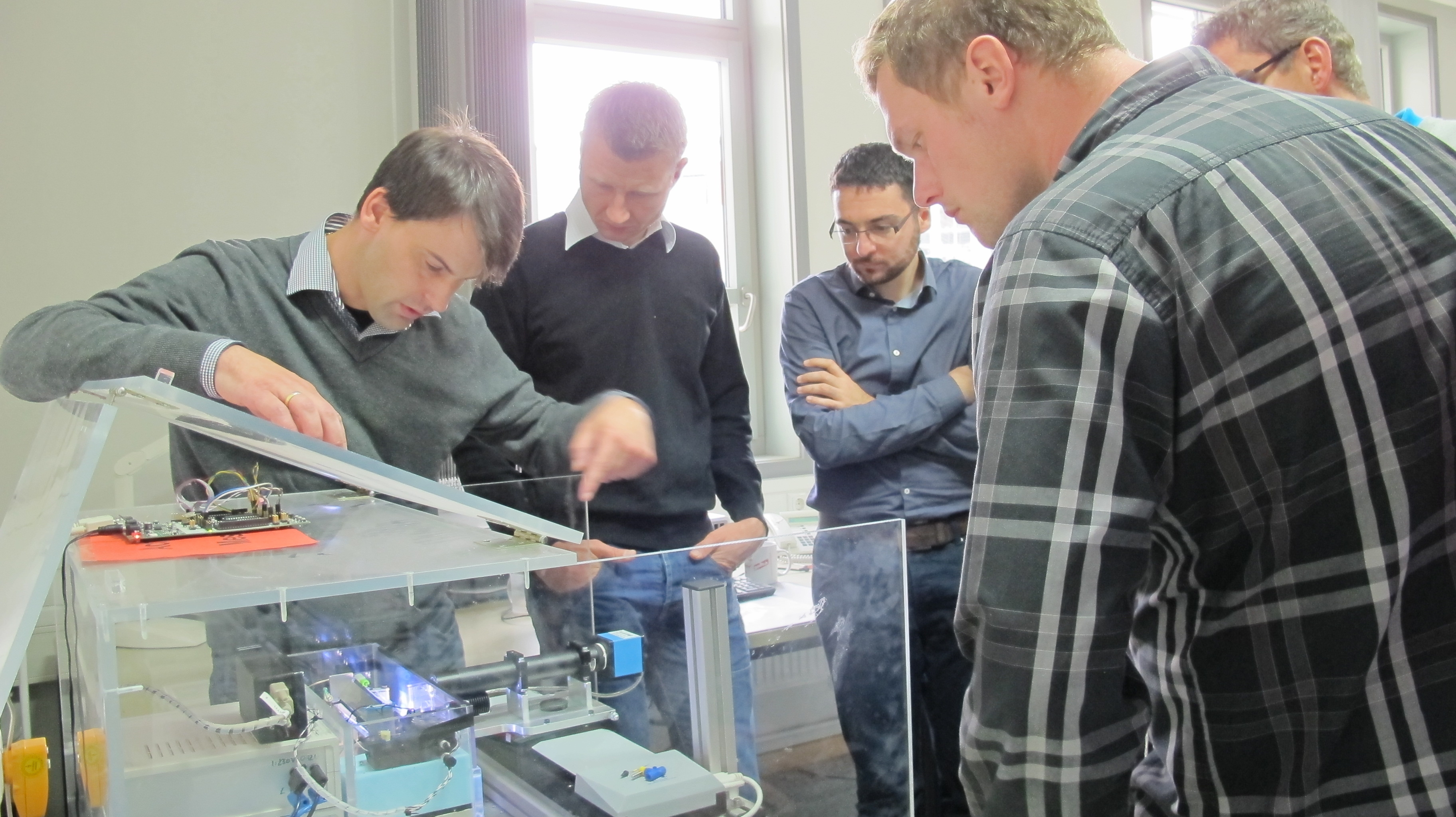
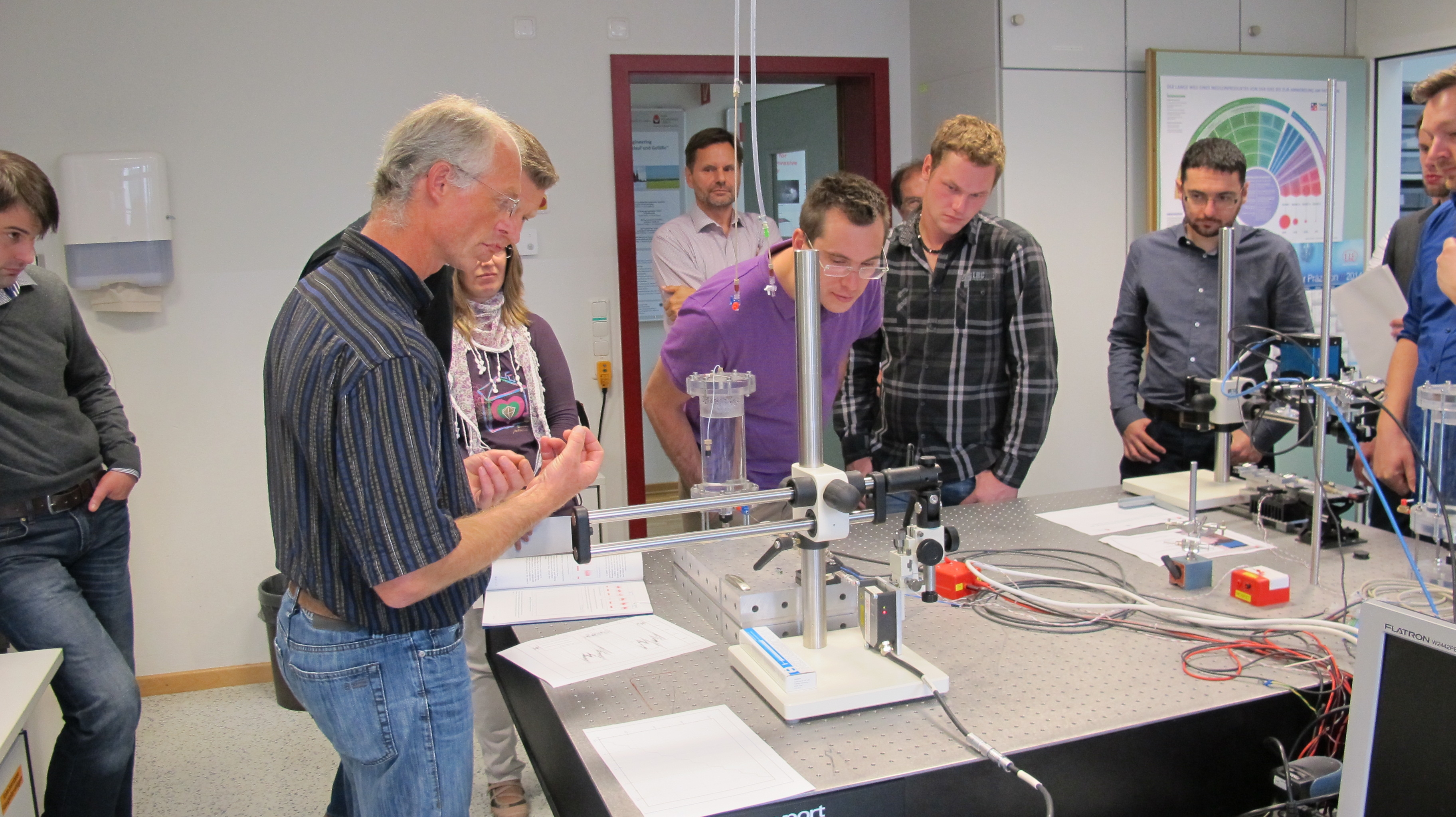
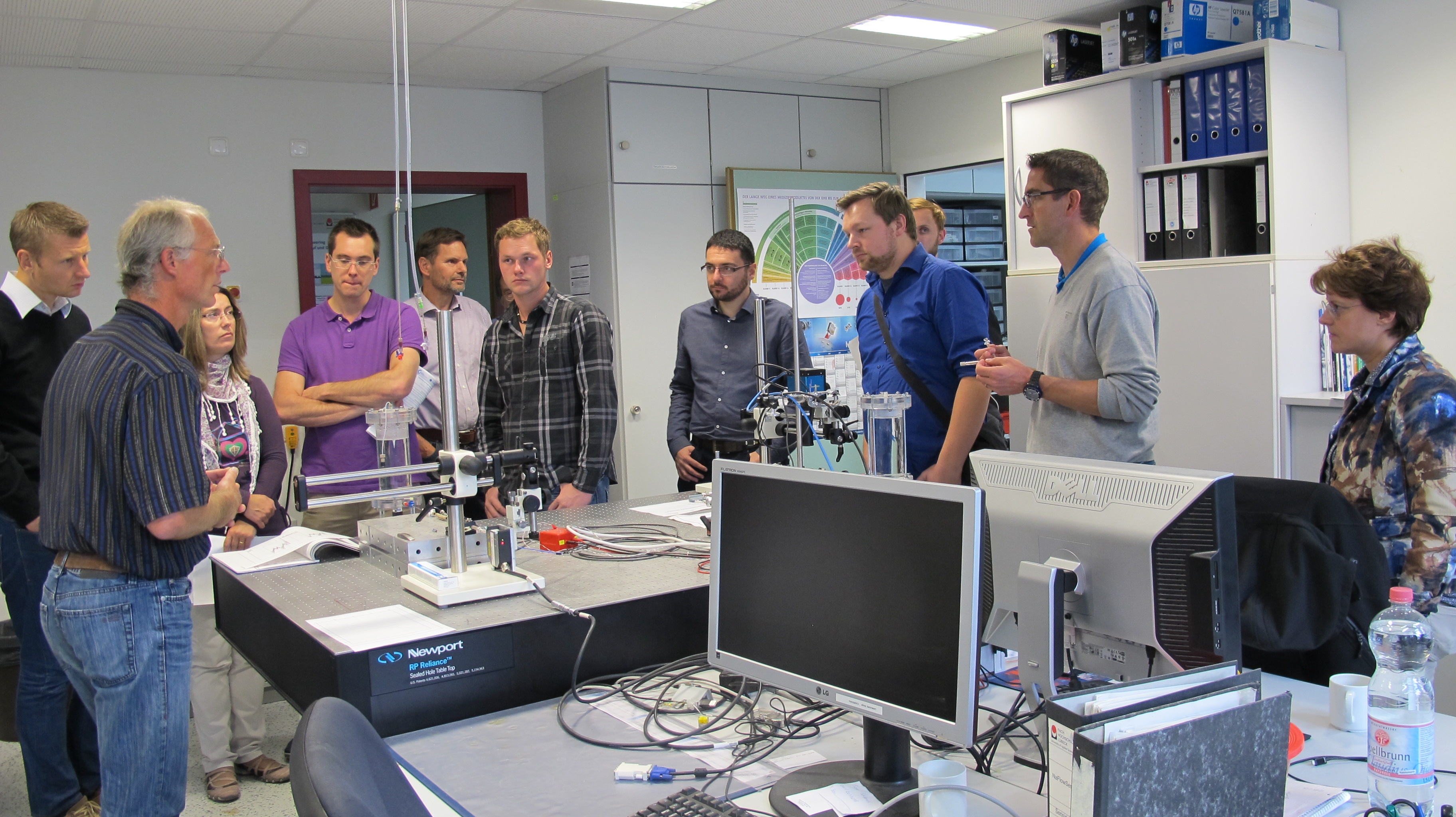
The third progress meeting has been held at FH Lübeck (Germany). Succeeding this meeting was the annual workshop 'Low Flows in Medical Technology'. At this workshop the preliminary results of MeDD have been presented. Via this link all presentations can be downloaded, whereas below some photo's of the progress meeting.

001002003004

New technical reports available

Peter Lucas 31 July 2014

There are various new technical reports available. Furthermore, all reports are now directly accessible.

White paper on micro and nanoflow rate measurement

Peter Lucas 26 May 2014

Defining the regions (1 – 1000) μl/min as microflow and (1 – 1000) nl/min as nanoflow, this white paper describes various principles for a primary realization of the measurement. In this document we briefly describe some common principles for flow rate calibrations. Typically, the gravimetric approach is used for microflow rates. For nanoflow rates potential methods are based on volumetric expansion and optic measurement of the dispensed volume. Click here for more information.

8th Workshop "Low Flows in Medical Technology" (Sept. 24th 2014)

Peter Lucas 20 January 2014

The exact dosing and measuring of liquid flows plays an important role in health care. For that reason, FH Lübeck (Germany) has been organizing an annual workshop on "Low Flows in Medical Technology" since 2007.

The 8th Workshop will take place on September 24th (2014) and will be organized together with the MeDD consortium. There will be presentations from academia, industry and the MeDD consortium. Follow this link for more information and to register.

Buoyancy correction

Peter Lucas 06 December 2013

The buoyancy correction is a correction to determine the true mass of an object on a balance if not in vacuum. A rock weighs less under water, and the same goes for weights in air compared to vacuum. When performing buoyancy correction for nanoflow measurement, the buoyancy correction becomes extra complicated, as effects of offset masses, which normally are negligible, become more important. As a part of the MeDD project, the Danish Technological Institute has developed an equation to determine the true mass of dispensed water when using a gravimetric set-up for flow measurement. You can find more information here
 

First intercomparison between novel primary standards completed

Peter Lucas 18 November 2013

Within MeDD various primary standards are developed for the calibration of infusion devices and flow meters. These standards, or calibration facilities, have been developed for liquid flow rates at ambient pressure and temperature. The flow rate range per standard varies somewhat; the combined flow rate range is between 1 nl/min up to 10 ml/min.

Goal of the intercomparison is to validate the various standards by means of comparing the calibration result for a so-called transfer standard. This transfer standard (in this case a flow meter based on the Coriolis priciple) is calibrated by all labs after which the calibration resuls are compared. For most flow points there is a good comparison between labs, click here to get access to the full results.

Some syringe pump characteristics

Peter Lucas 25 October 2013

How would you like if your new syringe pump pumps like this? Here a 60 ml syringe with a rubber based plunger sealing is set to pump 15 ml/h. It takes 4 hours to empty the syringe. The set-up is degassed and has no compliance in the tubing, which otherwise would dampen the flow pulsations.

The graph shows the delivered amount of water over time measured using a newly developed dynamic gravimetric flow tester with 10 Hz output. METAS and DTI are currently working on harmonizing and comparing dynamic microflow measurements to be able to provide you with the information you need to select a syringe pump suitable for your application. Many interesting facts have already been found, e.g. did you know that some syringe pumps are more reliable emptying the second half of the syringe, compared to the first half?

Many more measurements are still to be performed, next the performance with an inline flow meter will be tested, making the evaluation more robust having flow measurement data from both the flow meter and the dynamic gravimetric flow tester at the same time.

For more information please contact Claus Melvad (DTI) or Hugo Bissig (METAS).
Best poster award for MeDD at CIM

Peter Lucas 25 October 2013

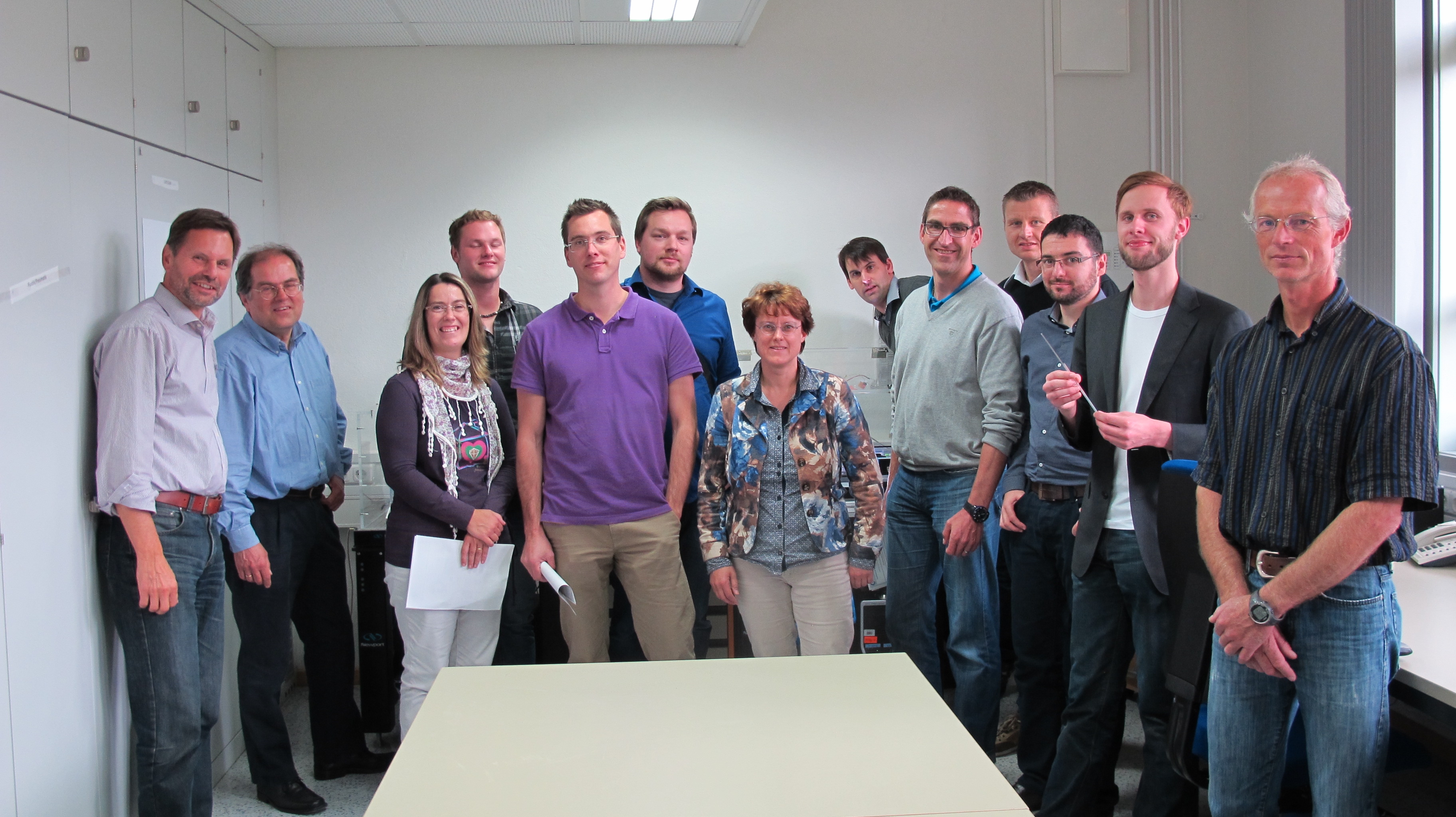
MeDD has been presented at the International Congress of Metrology. Here, Christopher David (CETIAT) presented the outlines of MeDD. The poster presenation received the Best Poster Award.

Survey on best practices infusion technology

Peter Lucas 22 October 2013

With this survey we aim to map the best practices among healthcare professionals who work with infusion technology. This survey takes place within the framework of a European research project concerning the improvement of drug delivery (MeDD). Your identity will be treated confidentially; your name and organization will not be disclosed to third parties.

We would like to encourage you to share this survey with your colleagues. Please do so by forwarding the link to this survey, or by filling in the questionnaire together with colleagues. In case you are interested, you can find more surveys here.

Effectiveness oil based evaporation cover

Peter Lucas 22 October 2013

DTI has evaluated the effectiveness of the oil based evaporation cover to lower than 5000 times compared to uncovered. At this evaporation rate it would take thousands of year for a simple glass of water to evaporate. But the twist is that it actually would gain in weight instead, from the amount of dust and other particles that would become suspended in the liquid over time.

This development is an important step towards enabling reliable nanoflow measurement, where otherwise the fluid would evaporate faster than it is pumped. In case you want to know more about this, please contact Claus Melvad at DTI.

Request for input from stakeholders!

Peter Lucas 01 February 2013

The main goal of this project is to upgrade the metrological infrastructure for low to ultra low liquid flow rates as required by the health and other industries. In addition, this project will perform a metrological assessment of drug delivery devices and flow meters. Finally, this project aims at developing a best practice guide for a safe and sound usage of (multi-)infusion (amongst others based on the results and experience generated during this project).

In order to align  the best practice guide and the metrological assessment with the needs of the end-users we need your input! Therefore, if you have experience with (multi-) infusion, drug delivery devices and flow meters, and you have an interest in aligning the outcomes of this project with your needs, please complete one of the following surveys:

Many thanks in advance.

First progress meeting held at IPQ (Portugal)

Peter Lucas 07 December 2012

The first progress meeting has been held at IPQ (Portugal). Here the design (upgrades) for the primary and secondary standards for micro and nano flow rates have been discussed. Furthermore the planning and progress of all active tasks has been discussed, amongst others including the progress on the inter comparison between standards for micro flow rates. Please contact us in case you want to know more or when you are interested in the activities with respect to the primary and secondary standards.

[12  >>